NICCI’s 'Startup Sambad' Identifies Policy Gaps and Infrastructure Needs to Fuel Nepal’s Startup Ecosystem
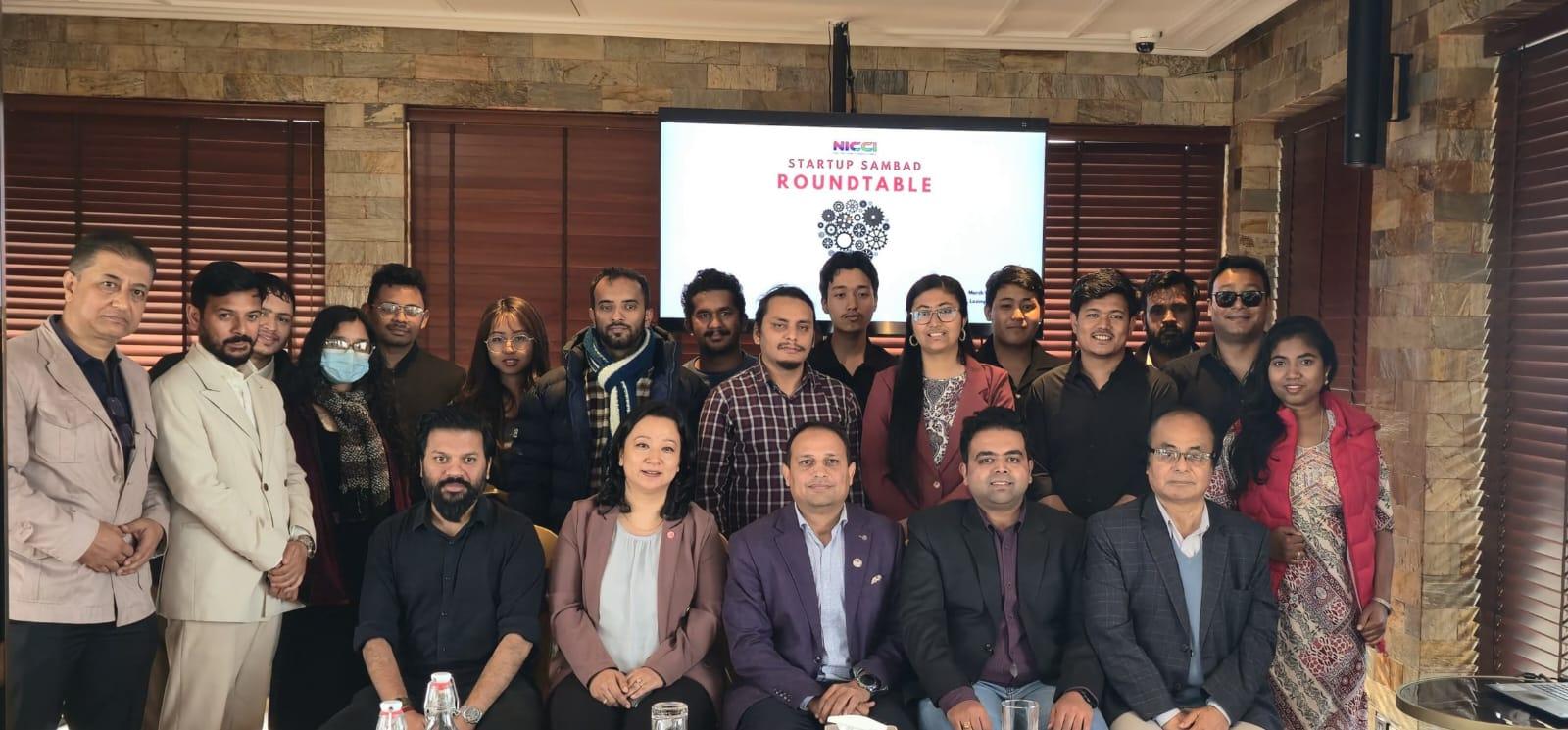
Kathmandu, March 13: The Nepal-India Chamber of Commerce & Industry (NICCI) hosted the "Startup Sambad Roundtable" today at the Dusit Princess Hotel, Kathmandu. The event brought together a diverse group of emerging entrepreneurs, academic leaders, and industry experts to dissect the "Startup Realities" of Nepal and chart a path for advocacy and institutional support.
The roundtable, chaired by Mr. Kunal Kayal, Vice President and Convenor of NICCI’s Startup and Private Equity Committee, served as a follow-up to NICCI’s ongoing efforts to curb youth migration by fostering a robust domestic entrepreneurial environment.
Addressing Structural Barriers During the reflection segment, participants highlighted critical bottlenecks hindering growth. Key issues raised revolved around infrastructure & procurement. Founders noted a severe lack of testing facilities and research parks. Mr. Subash Pandey (Agro Range Nepal) and Mr. Bijay Bhattarai (Diyo A.I.) emphasized that government procurement often favors imported products, urging a policy shift to prioritize local innovation.
Entrepreneurs pointed out the difficulty of navigating international payment systems and the complexities of bringing foreign investment into Nepal. The need for stronger Intellectual Property (IP) and patent protections was also a recurring theme. From the difficulty of procuring specialized materials for space tech to the "luxury" perception of IT services, startups voiced a need for the government to become an "early adopter" of domestic solutions.
Mr. Gaurav Tayal, Vice President of NICCI, welcomed the participants, noting that while Nepal has a vibrant pool of innovators, they require structured mentorship and simplified exit mechanisms to thrive.
Ms. Roshee Lamichhane of KUSOM and representatives from FNCCI and CNI shared insights on the fragmentation of the ecosystem. They highlighted that while incubation exists, it remains siloed within specific institutions. Mr. Sandeep Kamat, Member of the Startup Committee, drew parallels with successful ecosystems in Singapore and Bangalore, stressing that Nepal must better leverage its diaspora and build stronger bridges between academia and industry.
A Commitment to Advocacy Mr. Nischal Singh Bhandari from Aadhyanta discussed the "investment readiness" gap, noting that many startups require better financial structuring before they can successfully attract equity financing.
Closing the session, Mr. Kunal Kayal reaffirmed NICCI’s commitment to taking these insights to the policy level. "The challenges discussed today, ranging from regulatory hurdles to market trust, provide us with a clear roadmap for advocacy," said Mr. Kayal. "NICCI will continue to facilitate Nepal-India business linkages to help our startups scale and contribute to Vision 2030."
The participating startups recently benefited from a specialized training and mentorship program organized by the Government of India at IIT Madras, further strengthening the cross-border entrepreneurial infrastructure.