Sarvam AI's Dr. Pratyush Kumar Headlines India-Nepal Seminar on AI Collaboration Convened by NICCI, Embassy of India, and AIDIA
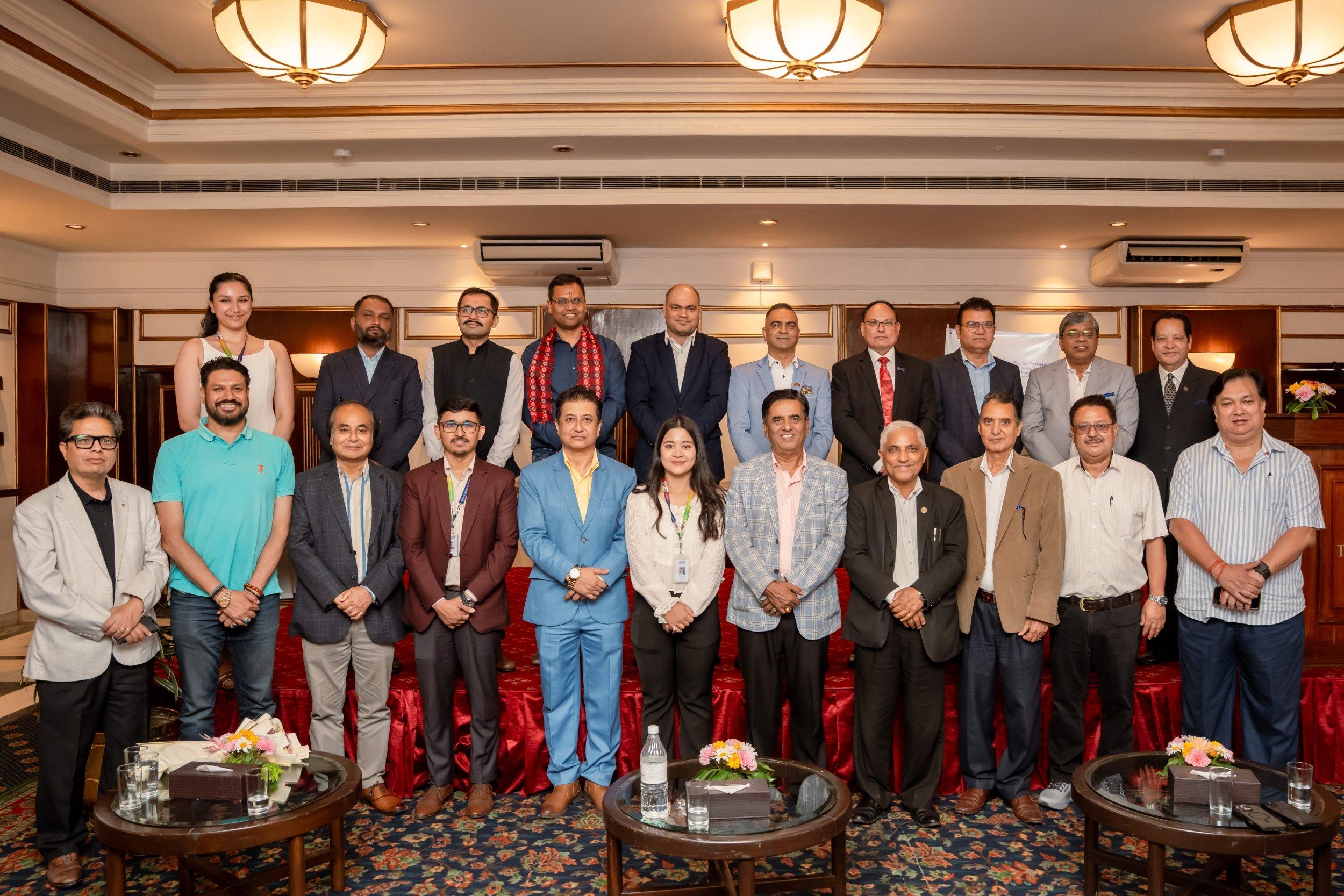
Kathmandu, Nepal, 12 June 2026- The Nepal-India Chamber of Commerce & Industry (NICCI), in collaboration with the Embassy of India in Nepal hosted a session in Kathmandu titled "India-Nepal Partnership in Emerging Technologies: Exploring Bilateral Opportunities for AI Collaboration." The program brought together leaders from business, government, academia, and the technology sector to discuss prospects for cooperation in artificial intelligence between the two countries.
The session featured a keynote address by Dr. Pratyush Kumar, Co-Founder and CEO of Sarvam AI, one of South Asia's leading builders of full-stack Generative AI and local-language AI systems. Prior to the program, Dr. Kumar held discussions with representatives from Nepal's technology and investment ecosystem, including Data World, Bichuten, Golchha Industries, Spark Group, and Sparrow SMS, on opportunities in digital infrastructure, AI, and emerging technologies. NICCI President Sunil KC welcomed all participants.
In his welcome remarks, NICCI President Sunil KC emphasized the importance of strengthening technology-driven economic cooperation between Nepal and India. He encouraged Sarvam AI to explore establishing a presence in Nepal and to pursue partnerships with both the public and private sectors. KC noted that such collaborations could catalyze broader investment from leading technology companies, helping bridge Nepal's foreign direct investment (FDI) gap through innovation-led investment, knowledge transfer, and strategic technology partnerships.
Suman Shekhar, First Secretary (Commerce) at the Embassy of India in Nepal, placed the session within the broader context of India-Nepal economic cooperation, pointing to shared interests in digital capacity building, startup support, and knowledge exchange on emerging technologies, and affirmed continued support for collaboration between Indian and Nepali stakeholders in AI and innovation.
Dr. Kumar's keynote addressed the rise of full-stack Generative AI and its implications for countries positioned as consumers, rather than builders, of AI technology. He described Sarvam AI's approach to developing systems suited to the linguistic and cultural realities of South Asia, with particular focus on local-language technologies as a means of expanding digital access and inclusion.
He argued that emerging economies have an opportunity to move beyond adopting AI tools developed elsewhere and instead build sovereign capabilities suited to their own populations, languages, and use cases. Outlining India's AI ecosystem, including talent development, research infrastructure, and policy support, Dr. Kumar offered practical considerations for countries at an earlier stage of AI adoption: the value of local-language models for reaching underserved populations, responsible deployment practices for maintaining public trust, and the cultivation of domestic talent pipelines.
He noted that Nepal's startup community and academic institutions are well placed to take early steps in this direction, pointing to India's experience, particularly in partnerships between government, academia, and the private sector, as a relevant model. He identified joint research initiatives, training programs, and startup ecosystem exchanges as areas where India-Nepal collaboration could take shape.
Dr. Bindu Nath Lohani, Chancellor of the University of Nepal, offered a special address on the role of higher education institutions in preparing future talent, advancing research, and supporting Nepal's long-term innovation agenda, with emphasis on academia-industry collaboration in equipping students and researchers for an AI-driven world.
An interactive question-and-answer segment followed, with participants raising topics including AI adoption by businesses, talent development, responsible AI governance, local-language technologies, and regional collaboration opportunities. The exchange reflected strong stakeholder interest in how Nepal can leverage AI to support productivity, competitiveness, and economic growth.
Dilip Bhattarai, Co-Convenor of NICCI's Startup & Private Equity Committee, delivered valedictory remarks, thanking Dr. Kumar for sharing insights from Sarvam AI's work and noting the value of direct exchange between Nepali stakeholders and regional AI practitioners. Marshal Rathour delivered closing remarks, thanking attendees and reaffirming NICCI's commitment to platforms connecting business, government, and technology communities from both countries.
NICCI expressed appreciation to the Embassy of India in Nepal, to Dr. Pratyush Kumar and Sarvam AI for their participation, and to Asian Institute of Diplomacy and International Affairs (AIDIA) and all partners and attendees who contributed to the program. The chamber indicated plans to build on this engagement through future programs on knowledge sharing, capacity building, and partnership development between Nepal's startup ecosystem and India's technology sector.
The Nepal-India Chamber of Commerce & Industry works to strengthen economic, trade, and investment ties between Nepal and India, supporting cooperation across sectors including business, technology, and innovation through its committees and programs.