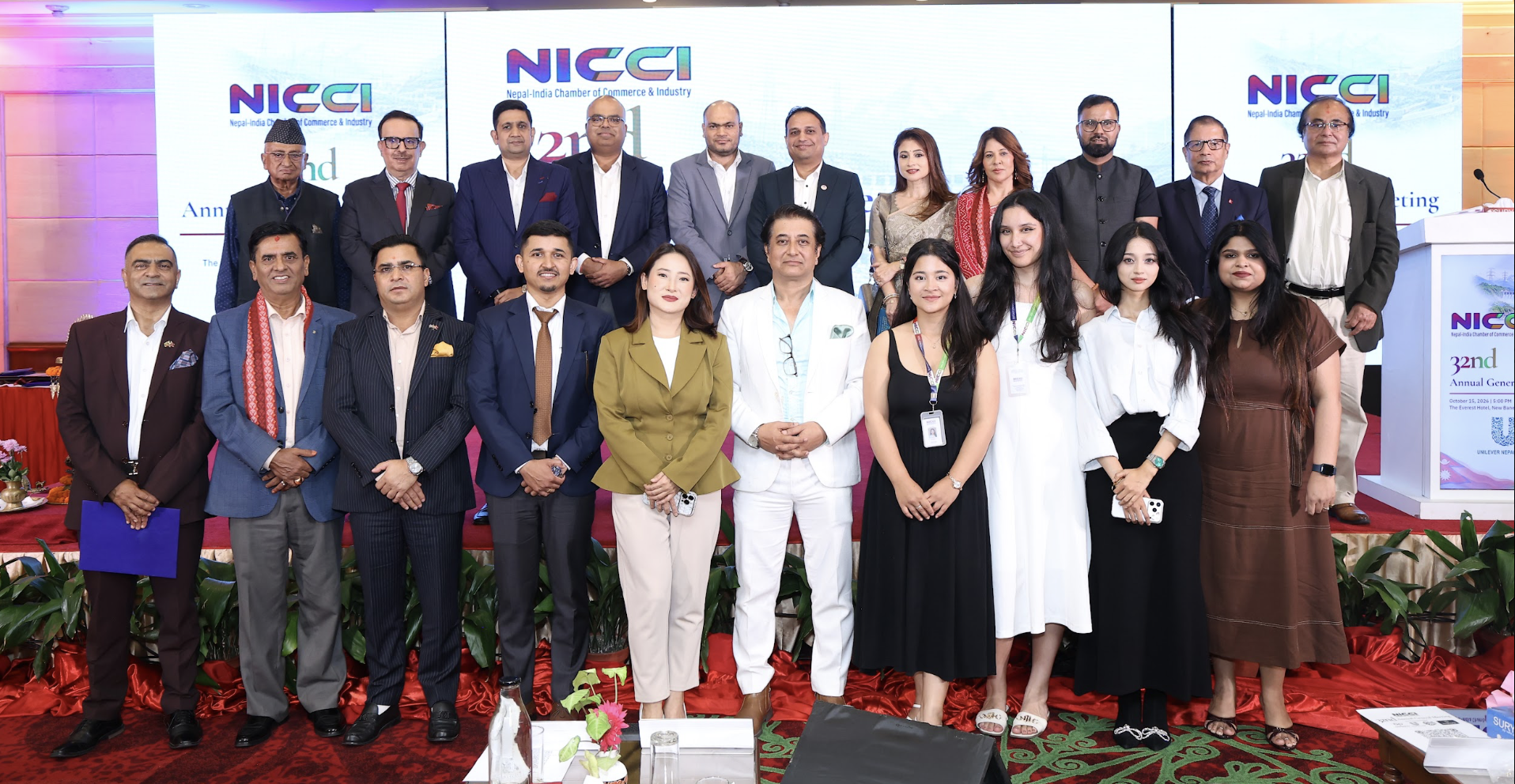
Kunal Kayal Takes the Helm at NICCI, Elected Unanimously with a Full Executive Committee
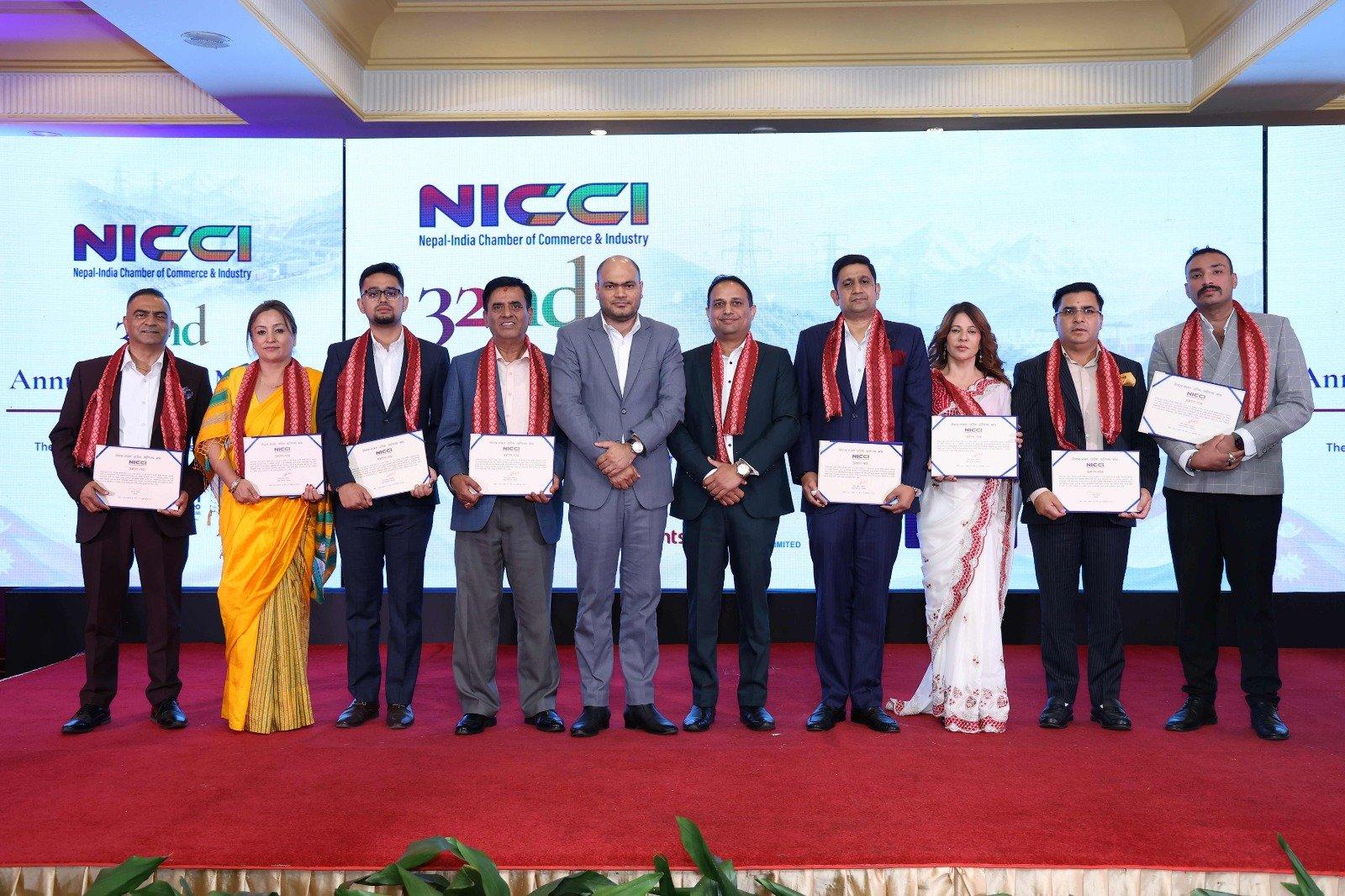
A chamber that spent its 32nd AGM celebrating three decades of institution-building has chosen continuity from within.
KATHMANDU, 16 October 2026 – The Nepal–India Chamber of Commerce and Industry (NICCI) has a new president, and the vote was unanimous. Kunal Kayal was elected as announced by the Election Officer at the chamber's 32nd Annual General Meeting, held at The Everest Hotel on Thursday, 15 October 2026. Every member of his Executive Committee for the 2026–2028 term was elected unanimously too.
Kayal had previously served as Vice President under outgoing President Sunil K.C. and as Treasurer during the tenure of Shreejana Rana. Members chose a steady hand at a time when the chamber's agenda is widening.
Newly Elected NICCI President Kunal Kayal also nominated the key post of the chamber by its first Executive Committee meeting. The composition of the Executive Committee led by Kayal now brings together business leaders from power, manufacturing, education, telecom, and trade which is as follows:
● Kunal Kayal, President
● Karan Kumar Chaudhary, Vice President
● Gaurav Tayal, Vice President
● Barnan Lamichhane, Secretary General
● Shailaja Adhikary, Treasurer
● Sanjay Agrawal, Executive Member
● Ramesh Sharma, Executive Member
● Shailendra Guragain, Executive Member
● Shashi Kant Agrawal, Executive Member
● Susan Karmacharya, Executive Member
● Binaya Upadhyay, Executive Member
● Ashik Shrestha, Executive Member
● Chandra Tandon, Executive Member
The AGM's inaugural session set the tone for the handover. Hon'ble Mr. Shisir Khanal, Minister for Foreign Affairs, was the chief guest. He described NICCI as a cornerstone of the economic partnership between the two countries and a strategic institutional partner to his ministry. He spoke of deep people-to-people ties and of an economy driven by investment and production, with shared prosperity as the goal.
The chamber also launched NICCI's 3 Decades Chronicle Book and the 4th Edition (2026) of its Investment Guide Book “A Handbook for Indian Investors-Investing in Nepal”.
Outgoing President Sunil K.C. used his welcome remarks to argue for proper institution-building and a joint Nepal-India ecosystem anchored in the private sector and economic diplomacy. He spoke of investor engagement and of taking the chamber's work to the Embassy of India, including the promotion of IIT Madras and INSPAN. His closing principle suits a day of succession. "Institutions must be greater than those who run them," he said.
Keynote speaker Professor Amitabh Mattoo, Dean of the School of International Studies at Jawaharlal Nehru University and a Padma Shri awardee, spoke on the architecture of Nepal-India relations. He noted that Nepal is exposed to decisions made in Delhi, described statecraft as the management of structural pacts, and set out five pillars for the relationship. He urged a shift from "land locked to land linked."
Dr. Shankar Prasad Sharma, former Ambassador of Nepal to India, thanked K.C. for quickening the chamber's pace. He pointed to petroleum pipelines, renewable energy, and the rise of India's middle class, and observed that investment from India has been slow. He called for an investment agreement framework.
Anjan Shrestha, President of the Federation of Nepalese Chambers of Commerce and Industry (FNCCI), raised the Nepal-India Joint Working Group and called for stronger public-private dialogue with an active advisory role for business.
Vidushi Rana, Member of Parliament and Permanent Invitee to NICCI, spoke as a manufacturer rather than a politician. She made the case for Nepal's green advantage, for clean energy that can replace coal to the benefit of both countries, and for more joint ventures and private companies to come to Nepal. Dr. Rakesh Pandey, Chargé d'Affaires at the Embassy of India in Kathmandu, attended as guest of honour.
Kayal received the Presidential Plaque and addressed members as President-Elect. The chamber honoured K.C. and Director General K.M. Singh with tokens of appreciation.
The agenda Kayal inherits is clear from the speeches alone. It includes investor confidence, an investment framework, energy cooperation, and a business voice that governments consult. His tenure for 2026–2028 will be guided by the theme “Expanding Economic Frontiers: Catalysing Bilateral Trade, Investment and Energy Transition,” setting the direction for NICCI’s work in strengthening Nepal–India economic ties.